Allow me to begin with something very simple: to thank you.
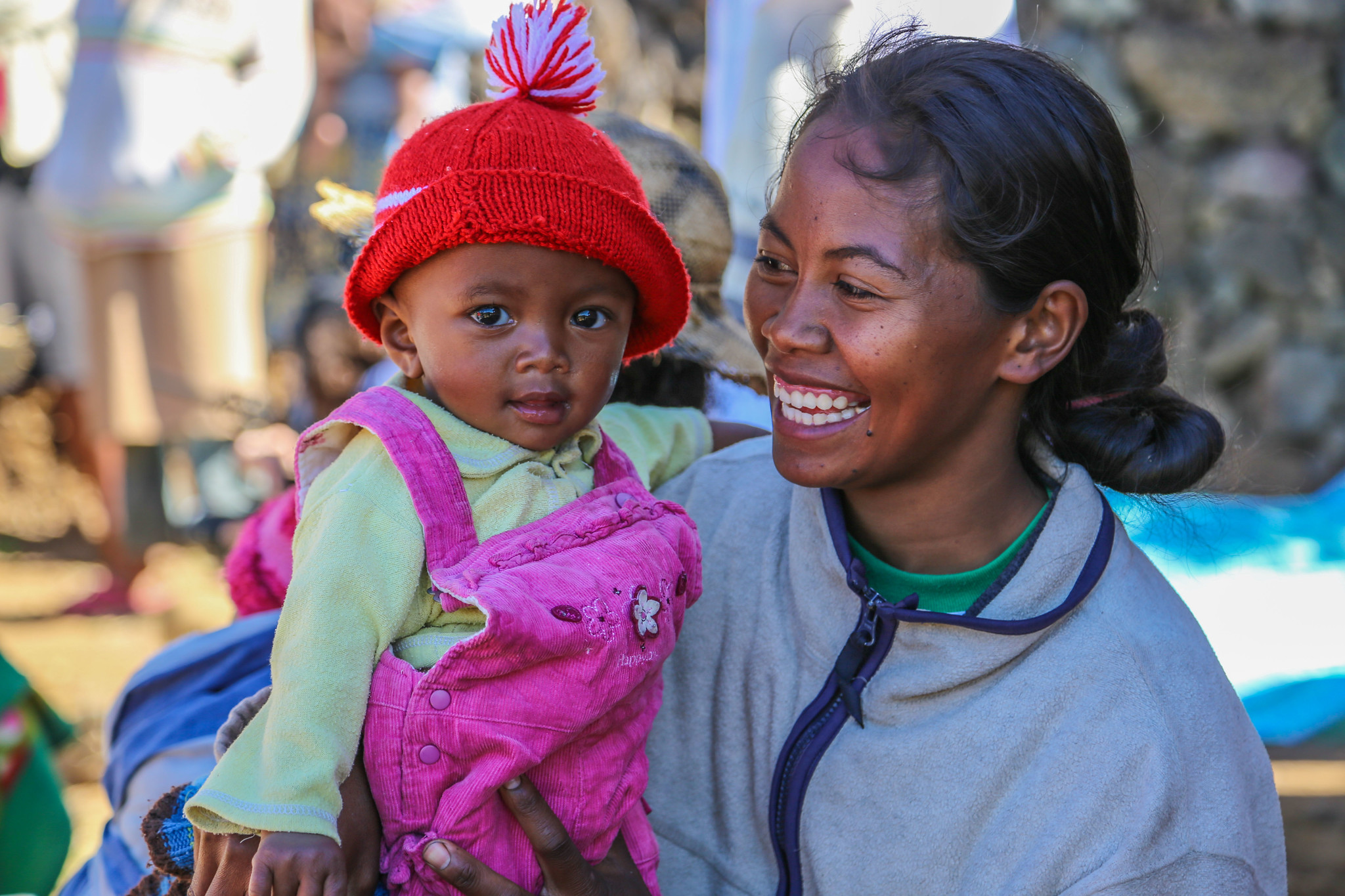
Thank you for having invited me here, in Nairobi, to stand before you not as an expert in international law, but as a woman, a mother, a citizen.
I was asked to speak to you about the right of women to transmit their nationality to their children. I could cite articles of conventions to you, speak to you about the CEDAW Convention, or about the Declaration of the Rights of the Child. But this morning, I am going to speak to you about the only thing that I truly know: my story.
Behind the texts of law, there is us. There are our lives.
A few years ago, my family was living in the shadow of a silent injustice, which did not say its name.
I was born of a Malagasy father and mother. I was born in Madagascar, this country that I love. I grew up there, I studied there, I built my life there. I met my husband, and we had children. Everything seemed normal, until the day when it was necessary to accomplish the simplest acts of civic life: enrolling my child in school, having them make an identity card, traveling.
That is when the law caught up with me. It told me, me, their mother: “You, you do not count.”
In our country, at the time, only a mother married to a citizen could transmit her nationality automatically. Me, because I had married a stateless person, I had become legally incapable of giving what most precious thing I had to my children: belonging to their own land.
My children, born of my body, raised with my love, rocked by my stories of our native land, were considered as foreigners at home.
Suddenly, our household was divided in two: on one side, the citizen mother; on the other, the stateless children.
It was not only an administrative problem. It was an intimate wound.
How to explain to my son that he could not take an exam because he did not have the “right papers”? How to make him understand that his identity was incomplete? Each administrative form was a humiliating reminder of my powerlessness as a mother. Each door closed because of these missing papers was a door closed to my maternal love.
I felt diminished. I felt less of a citizen than my father, than my brothers. The law sent me back the image of a second-class woman, incapable of protecting her own offspring.
Nationality is not only a passport. It is the key that opens the doors of the school, of the hospital, of protection. It is the first shield against exploitation.
To put you into the heart of it, please allow me, if you please, to tell you an example among so many that my family endured.
Wanting to extend her house onto my land and having unavowed aims of blocking the path which goes toward my house, and knowing the statelessness of my husband, one of my neighbors took advantage of it to denounce him to the border police. Her aim was to expel him or else to blackmail me. Fortunately, the police were able to trust all the administrative papers of my husband who, moreover, already did his military service in his youth.
And then, one day, the wind turned.
On January 25, 2017, thanks to the tireless work of my husband, Focus Development Association, UNHCR and of many of you, thanks to the pressure of civil society, thanks to a collective awareness, our country reformed its law on nationality.
That day, when the President promulgated the reform — law 2016-038 — something magical happened in me. It was not just a new rule in a code. It was a recognition.
If I am not mistaken, I am the first woman of Madagascar to have transmitted her nationality to her children.
I cannot find the words to describe when I received from Antananarivo court the nationality certificates of each of my children. For the first time, the State looked me in the eyes and said to me: “You are a citizen fully. Your place in the nation is as legitimate as that of a man. Your link with your child is as sacred and recognized as that of the father.”
What did this reform bring me? I will tell you with my heart.
It gave me back my dignity. Going to the counter, handing my birth certificate and that of my child, and seeing the employee smile and say “It’s good, Madam” was an act of healing. I was no longer an intruder in my own homeland. I was finally a mother fully legitimate in the eyes of the law.
It healed my family. My children were able to pursue their dreams without this invisible barrier. They were able to apply to the university that they wished. They were able to receive a passport each, and they were able to travel far from their country.
At this moment, thanks to this reform, one of my daughters finished her studies and works in Germany. The second of my sons studies in France. The case of my husband inspired my last son to study politics — he holds a Master in Political Sciences and pursues, at this moment, his higher studies in Iraq.
The uncertainty disappeared from our household. The fear flew away.
And that transformed my vision of myself. I suddenly realized that my voice counted. If I had been able to influence this change by my story, then I could contribute to building my country. The reform did not only give me a right — it gave me a responsibility: that of being an active citizen.
So, Ladies and Gentlemen, I am here today to carry a simple, but urgent message.
In Africa, too many women still live what I lived. Too many mothers see their children become foreigners in the only country that they know. Too many families are broken by discrimination.
Each country that refuses a woman the right to transmit her nationality deprives its own children of their identity. That creates vulnerable generations, generations that grow with the feeling of belonging nowhere.
But each reform, each law that changes, liberates an immense potential. It liberates the mother, it liberates the child, and it reinforces the nation.
I ask you from the bottom of my heart: look at your laws. See if they fully recognize the woman as the equal source of nationality. If it is not the case, know that these laws are not neutral. They have a human face. They have the face of thousands of children who wait.
You have the power to make sure that each African mother can look her child in the eyes and say to them, without fear: “You are at home. You are of ours.”
This is not a question of politics. It is a question of justice. It is a question of love.
Thank you.