Dr. Isata Mahoi
Minister of Gender and Children’s Affairs of Sierra Leone

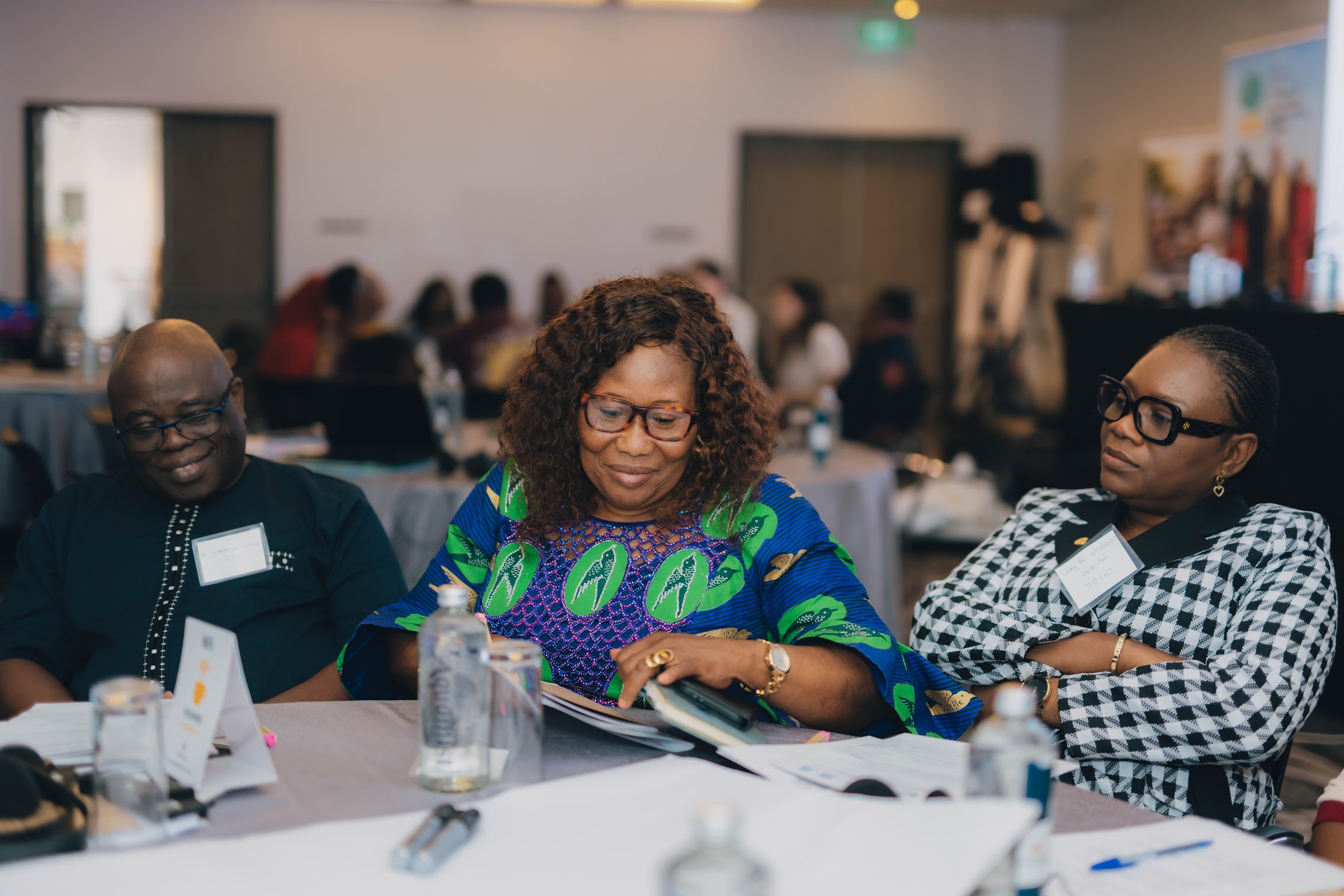
The Global Campaign for Equal Nationality Rights (GCENR), together with longstanding partners Equality Now, the Global Alliance to End Statelessness, the Inter-Parliamentary Union, UNHCR, and UN Women, convened the Africa Multistakeholder Convening on Achieving Gender Equality in Nationality Laws to accelerate reform efforts across the continent.
Held in Nairobi in February 2026, the convening brought together government representatives, parliamentarians, civil society leaders including impacted activists, and regional and international experts to move toward coordinated action. With each day centered on the lived realities of impacted activists, participants shared national experiences, identified legal and political barriers, and worked collectively to advance solutions. The convening resulted in the development of clear road maps for multistakeholder action to achieve reforms and reinforced a growing commitment across Africa to uphold women’s equal right to confer nationality on their children.
We have seen the willingness of African governments, parliamentarians, and civil society to address this man-made problem that is holding countries back. The Protocol to the African Charter on Human and Peoples’ Rights on the Specific Aspects of the Right to a Nationality and the Eradication of Statelessness in Africa provides a clear legal and political framework for reform and firmly grounds the imperative to end gender discrimination in nationality laws in Africa’s own human rights system. Gender-equal nationality laws is also an obligation enshrined in international human rights conventions that have been widely ratified across Africa, including the Convention on the Elimination of All Forms of Discrimination Against Women and the Convention on the Rights of the Child.
Minister of Gender and Children’s Affairs of Sierra Leone
Secretary General, Inter-Parliamentary Union (IPU)
Mother impacted by gender discriminatory nationality law reform
Affected mother and activist
Chairperson of the African Committee of Experts on the Rights and Welfare of the Child (ACERWC)
Former Member of Parliament of Madagascar and Secretary General of the African Network of Women Ministers and Parliamentarians (REFAMP), Madagascar Section
Regional Director for Eastern and Southern Africa, UN Refugee Agency
Regional Director for East & Southern Africa, UN Women
Vice Chair and Rapporteur, UN Committee on the Elimination of Discrimination Against Women (CEDAW Committee)
Director of Protection, Liberia Refugee Repatriation and Resettlement Commission
Associate Director, Legal Equality, Equality Now
Legal Officer, Statelessness Section, UN Refugee Agency
Legal Advisor, Legal Equality, Equality Now
Legal Officer, Focus Development Association
Campaign Manager, Global Campaign for Equal Nationality Rights
Group portrait Convening
 Convening
 Convening
 Convening
 Convening
 Convening
 Convening
 Convening
 Convening
 Convening
 Convening
A shared commitment. A call to act now.
We have seen the willingness of African governments, parliamentarians, and civil society to address this man-made problem that is holding countries back.
The Protocol to the African Charter on Human and Peoples’ Rights on the Specific Aspects of the Right to a Nationality and the Eradication of Statelessness in Africa provides a clear legal and political framework for reform and firmly grounds the imperative to end gender discrimination in nationality laws in Africa’s own human rights system.
African mothers and their children cannot wait: equal nationality rights must be guaranteed in law and in practice to protect families, uphold women’s equal citizenship, and prevent statelessness.
We pledge our support to realizing gender-equal nationality rights across Africa and beyond. We urge African governments and parliaments to act now by amending discriminatory nationality laws and ratifying and domesticating the African Union Protocol on the Right to a Nationality.
Read our full statement
© 2025 GCENR